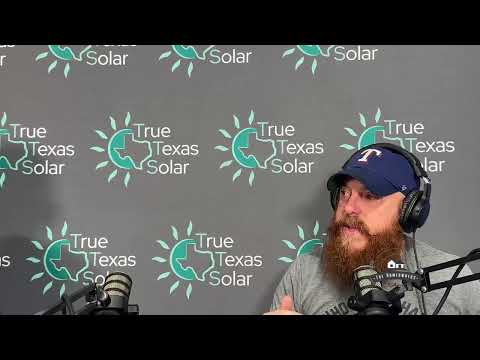
Good morning, and we are live from the Sci-Fair Home and Outdoor Show. This is the Homeowner Show. We are glad you here. Uh, you here. You're glad you here.
We're glad you here too, Kev. That's right.
That's right. My name is Kevin Hackett, and here with me is Craig Williams. And, uh, what's going on, man?
Hey, hello, hello, hello. Welcome to Homeowner's Show. We are not in the studio. We are live here at the Berry Center with our friends from True Texas Solar in their booth. If you are here and you happen to catch the— get the notification that we are live, come by and say hello. We'd love to see you, shake your hand, say, how do you do? How are you doing, Kev? How you do, Kev?
Oh, dude, I'm good, man. I'm good. It's gonna be a busy weekend, but this is exciting, man. All kinds of vendors here as we, as we look around. We did this a couple of weeks ago, uh, up in Conroe, but here we are in the Cy-Fair area. We're at the Berry Center.
And I don't know if you may have said that a minute ago, but—
Yeah, I thought you did. But, uh, once again, the Berry Center. Uh, this place is amazing and there's a lot of people here. So, I mean, look, you, if you're looking for any type of home service, uh, I, I would encourage you to come out and you can meet us and, uh, say hello. All that kind of stuff.
Yeah, absolutely. And there's even like, you know, some, some pretend, uh, broadcasting people around the corner.
I mean, like, I think they're on the radio.
What? The what? Monopolies.
Nobody, nobody in the world is listening to them right now.
I mean, I don't want to, I don't want to throw shade on anybody, but like, come on, man.
Nobody's— I'm serious. Nobody's listening. Sorry. Sorry. We're— anyway, hello Facebook, the entire Facebook world.
I think you're bigger than the AM world.
You got a few billion users.
Yeah, something like that.
Something Well, uh, what are we gonna do today, Craig?
Well, we, we gotta— we got a guest here. Why don't you let everybody know who you are and, and what you do, man?
Hi, I'm Dale Claudell. I'm Chief Financial Officer for True Texas Solar, also a co-owner in the company. True Texas Solar is a family-owned, faith-based company. We've been in business for 2 years, so we're an upstart energy company located in Conroe, and we are a full-service engineering procurement construction, or EPC company, for both residential applications for renewable energy backup generation, and the same for commercial customers as well. So it's great to have you here with us.
Yeah, man. And I know you wanted to spend some time talking about like some of the nuances of commercial solar power. But real quick, how did you get roped into all this, man? How'd you, I mean, 'cause you haven't been doing solar your whole life.
Not my whole life, but I've been in the electric utility industry for 26 years. Prior to coming to True Texas Solar, I worked with Entergy Corporation, which is a very large investor-owned, vertically integrated public utility that serves Southeast Texas, areas close to here, as well as Louisiana, Arkansas, Mississippi, and had a variety of positions there. I was Vice President of Power Generation, so I was responsible for their fossil-fueled power generation fleet as well as the growing renewables that they have and had a great career there, great opportunity. I was responsible for grid modernization there as well and then went to Black Veatch, which is like True Texas Solar, but obviously at a global scale, focusing on utility and heavy
industrial applications. They're an EPC firm. You know, I desired to have a closer touch to the customers, the end customers. Yeah. That's where my passion has always been. I believe heavily in what we do, the whole value that you get from sustainable solutions, not only the impact on the environment, but the energy independence it gives to customers, is something that I'm passionate about. So after having worked in the corporate world for 26 years, I decided to come in and to become an owner of True Texas Solar and to bring a lot of the utility-level processes, the professional practices that we had established on the megaproject scale, to True Texas Solar so that we could be increasingly enabled to do
commercial projects and to do them with safety and cost and schedule certainty.
Yeah, so, so then what are the, the big benefits for like a commercial business to, to go with solar or to, or I mean, I guess to have it be their main source of energy?
Yeah, you know, it's very much the same as it would be for a residential homeowner. The benefits are very much the same, but there are some additional ones as well. Primarily, it's the reduction of energy costs. You know, the great thing about renewable energy like solar power is that once you have the system in place, you're able to produce, you know, electricity from the, from the sun, obviously with zero cost for the production of electricity. There's very minimal cost with maintaining the systems because, you know, for those that are battery backup or solar PV, there's really no moving parts. And so—
Real quick, what does PV stand for?
Oh, I'm sorry. Yeah, photovoltaic. So, okay, there are different forms of solar energy. That you can— or solar energy technologies. So you could do concentrated beam solar, but photovoltaic is the most common with the solar panels.
Yeah. So you get the benefit, the energy benefit associated with the reduction of having to purchase that power from the grid. You also get the benefit of having a source of backup power when you couple it with a battery, or even if you do decide to couple it with a generator as well. A lot of the customers that we're seeing in the commercial space are really interested because they want that 100% service factor that you can get from a renewable energy system when it's coupled with backup generation. We were talking to a gas station owner the other day who said that during a storm that had occurred a couple years ago, they were able to stay in
business because of their backup generation and essentially make all the revenue they typically make in one month because of increased demand. Their competitors couldn't do it. So financially, it's the energy savings that really drives the benefits. I'm sure we'll probably talk about this in a minute if you go there around the initial cost of the system.
Often the biggest consideration to consider, but there are unique benefits that apply to renewable energy systems as owned by businesses as opposed to residential homeowners in order to be able to reduce that cost. The other benefits that we're seeing people increasingly being driven by are ESG scores or Environmental, social, and governance scores.
It's really a way of measuring the sustainability of companies, and there are international standards for that. And increasingly for those companies that are investor-owned, investors are putting their money into companies that have high ESG scores or companies that focus on environmental sustainability, social causes, and strong governance as, you know, they're managed at the corporate level. And so I would say that those are the biggest benefits, and we can help customers map out a plan in order to achieve all of those.
So I got a question related to some of this because what I love the idea of personally as a consumer, I love the idea of a business being able to stay open if there's power outage, especially if it has to do with like energy sources like gas, you know, especially if I'm running a generator at home and it's a gas generator or, you know, living here in Houston. I mean, goodness, if a hurricane comes through, a lot of people are running gas generators, right? And so we have issues with those sorts of things. But how would a, how would a business owner who doesn't own their space— because a lot of commercial real estate is not owned by the business, it's owned
by a bigger entity of some sort— what, what is your suggestion of getting some of those businesses to advocate for, hey, if if an outage happens, or maybe here's an opportunity for you to own your own energy. What is your suggestion as far as that goes?
Well, that is true. I mean, it's also the case with us at True Texas Solar. We lease our office space. You know, one of the things that a business owner can do is to have a discussion with the property management company, whoever is managing the property where they rent or lease and to discuss what the benefits would be of that owner investing in a system for them. Number one, it could create stability in the revenue streams because they're able to be more financially healthy whenever they are able to stay in business. And that's always a challenge.
And the lessee is able to go, look, I can be in business longer.
If there's this energy opportunity And if something happens and I tank, well, then now you're out a lease agreement.
Yes, that's true. And what I have seen, we have talked to— we have one real estate developer that has multiple buildings, multiple meters, primarily used for office space, a little bit of light commercial kind of manufacturing there as well. And the owner of the building is interested in implementing a renewable energy system for a number of reasons, one of which is that he can charge back to his customers at that space a reasonable price for the power so that he can manage the energy usage at that level and earn some revenue from it. The other thing is the owner of the space may be better positioned to be able to fund a system like that because he might be
sitting on lots of deposits that he has in managing his commercial property suite. so to speak. And the benefits that the government offers, and for commercial business, well, for everybody, no matter if you're residential, commercial, or industrial, the Inflation Reduction Act, and specifically the investment tax credit, would apply for a commercial project as well. And for those of you who out in your viewing audience may not know what that is, within the Inflation Reduction Act, the investment tax credit allows owners of renewable energy systems to to receive a 30% tax credit against their federal tax obligation, 30% of the value of the system as it is installed. The caveat with that is, is that they need to be able to
have the tax liability so that they can leverage it because they're not going to get— they're not going to get a check for it unless they're a nonprofit, a government entity, or a tribal entity. They're not going to get a check for that, but they will be able to offset their federal tax credit by that. In addition, whether it is a business that owns the property where they are doing business or there's a landowner there, for commercial businesses, and this is one of the differences with, you know, from a residential perspective, a business can depreciate the asset. And not only depreciate the asset, but there is a specific system at the federal government level called the Modified Accelerated
Cost Cost Recovery System, or MARCS, that allows you to take a long-lived asset like a renewable energy system and depreciate it over 5 years. And so not only can you depreciate it over 5 years, but you can also take what's called bonus depreciation in the first year. The net effect of that is that you can combine both benefits, the Inflation Reduction Act and the investment tax credit within it, and accelerated and bonus depreciation associated with the MARCS system. for a project, let's say, that costs $100,000, and for the business, if they have a tax rate of, let's say, 21%, at the end of year 1, they will get a $41,000 credit on their taxes. So on top of the 30%, they'd get another 11%. And one last thing is that if you can ensure— and we could do
this as, as True Texas Solar— ensure that at least 40% of the material for that system is constructed from domestically produced materials, they get an extra 10%. So in that scenario, after year 1, it'd be 50% of the cost of the original.
Yeah, that's what I was actually gonna mention, that because, um, the church I attend actually just, uh, invested in solar. And, uh, because they're a nonprofit, they, they literally got— I mean, because they did, they took advantage of all those things you just said.
And so 50% of the cost of the solar came back in the form of a check.
Because they're nonprofit, not because they— it's not against their tax liability because they have no tax liability. That is something that's changed recently in the government.
Uh, to be able to really— you have to recognize, and I know there are skeptics out there that like us, that solar this, solar that, but at the end of the day The government is recognizing that we have to figure out a way to increase our energy and to, and to not just rely— with more people, more homes, more businesses, more electric vehicles, I mean, all these things, we're gonna have to figure out a way to increase energy output so that we can have the energy input. So they're, they're looking at ways to include that in things like nonprofit that really didn't benefit from it, right, you know, a few years ago. But now, um, that was really good for us. Not only that,
there were some things that you're able— if you do this right, then you can also roll in, uh, roofing needs, roofing repairs, roofing— like, for example, we, we had a metal roof at our church.
Well, there's a very cool coating that you can put on a metal roof that reduces the, the heat level that that roof absorbs by like an incredible like 50 to 60%. It's incredible. You apply that before you do it and allow— you kind of lump it all in. You can put it into the loan and get that first half back as well. You get all of it at once. So there's so many benefits. I'm not, I'm not trying to do your job for you here. Yeah, but I am—
you're doing a great job.
I am just saying that like you said a lot of big words words just a minute ago, and practically I, I'm going, okay, how does that work just for a nonprofit? That's how it would work for, for an instance that I'm aware of.
But I see what you're saying as well for, for a for-profit business. Many of them still have hundreds of thousands of dollars of tax liability.
Every year, you know. So to be able to get back, you know, even even at 30% all the way up to 50% of that in a form of a credit.
That's massive because a difference— talk about the difference between a credit and just a deduction, uh, like a standard deduction or an increased deduction versus a credit. What's the difference?
Well, the difference between a credit and a deduction is, you know, a deduction would allow you to deduct from your wages, from your adjusted gross income, That is the basis upon which tax is assessed. And so in that sense, it's not a dollar-for-dollar reduction. You're just reducing dollar for dollar your income, and then you're taxed on less of your income. But a tax credit is really lucrative because that is a dollar-for-dollar reduction in your tax obligation to the government. And to further your point, you know, I'm just looking right across from us, we've got someone who is doing windows. And we've got roofing a couple booths down. And just as you said, within the Inflation Reduction Act, there
are provisions where you can get credits if you install energy-efficient windows, do roofing repairs needed for the solar like you mentioned, but also for installing energy-efficient appliances as well.
Sure. That's awesome. Yeah, there's options.
Well, and so I know this is something we actually talked a little bit about before the show about, you know, we're going to be discussing— last time we discussed residential, we were going to talk on the more of the commercial side. So are all those benefits available regardless of whether or not you own the property? Can you be like a tenant and then have solar installed to get the same benefits?
Well, you can, you know, that would be an arrangement between the business and the property management, of course. But the answer would be it depends upon how the property manager wants to allocate those benefits. Whoever owns the property owns the system.
And then they would get the tax credits that we talked about, and the energy could be— some of those benefits could be transferred to the tenant of the property. It just depends upon whatever arrangement makes sense. As I mentioned, one of our customers was thinking about doing that, and for some tenants, you know, they would like to be able to just have one price and not have to worry about their energy usage. as it cycles, that could be a little protection they would get from having to make higher payments in the summer or in periods of peak demand.
Because I'm thinking, honestly, I'm thinking selfishly, like I personally own the property that my businesses office out of. But those are our office locations. The business rents those from me.
So, and I'm sitting here going, okay, so the benefits sound better on the commercial side. So if I could do them through the commercial end, but still retain the ownership of the property As an individual, that'd be incredible.
Oh, for sure. Yeah. I mean, when you think about it, as we talked about, the ability to depreciate the system really compounds on top of the Inflation Reduction Act. You know, the thing is, one of the things—
I love that name, by the way.
I'd be interested in hearing your views.
It's counterintuitive, but I get it. If you think about it, it's to decrease the rate of inflation, but it's inflation reduction anyway. Yes, it's like an oxymoron. Thanks, government.
Let us spell out exactly how we're going to fail.
Right, exactly. Sorry, I interrupted completely. Did you— did I sidetrack you?
I think, you know, really what I was saying is that one of the main differences from an initial upfront cost is the ability to depreciate the system, not just to depreciate it, but to advance it up and to lower your obligation. And to the extent You don't have a current obligation in that year that meets that full benefit, you can carry that forward and then decide how you want to allocate that. If you have the property that you own, well, then you would capture that benefit and you could then determine how you want to pass it on to someone who might be renting your premises.
And is it, I mean, like at that point, is it better for, and Kev, you may know this because you guys just put one in, but like, is it better to build more than what you need? I mean, I, and I guess some of that depends on like, you know, who your power company is, because like where we're at, which is MidSouth, which is a— what is MidSouth, Kev?
It's a co-op. It's a co-op. Thank you. Yeah, a co-op. They don't, they don't buy back any additional that we would make, which is one of the, one of the issues we've run into with putting solar on our property in general is like we lose incentives by, you know, our power company not offering those like other ones do.
But I'm curious, on the commercial side, would it be beneficial to build more than what you need, or do you just kind of design it for exactly what you need?
Well, I think for the most part, our clients seek to achieve 100% offset. And offset is a term that we use that when we think over the course of a period of time, let's say annually, there is so much energy demand that they have, right? And what we typically do, the vast majority of customers want us to try to achieve zero there. And because of what you mentioned, because most utilities or co-ops don't buy back at the rate that they sell it to you for, right? They typically buy it back at their avoided cost. And so you get a very low price for what is generated over what is consumed. through the use of credits. So it really depends upon what rate plan you're in. Here in this part of the
state, you know, there are rate plans that do what is called net metering, which is basically to buy back and to give you credits for the energy that you've produced at a rate in which you use it, the same utility rate that you use it. And whenever you do that, that offers a lot of flexibility, and it could be a source of revenue for you, quite frankly. And when you think about it from a commercial, but you know, the biggest driver of the economics for any system, and especially commercial, are going to be the design considerations of the building. So for example, we've got a commercial project in San Antonio. It is a high-rise apartment for low-income individuals, is government subsidized, but it's on 10 floors up.
And so there's a lot more wiring and conduit that we use in that project than we would if it were, you know, something that was closer to the ground, 10 or 20 feet off of the ground. And so cost is going to be a real consideration there. But if when you think about the benefits that we talked about earlier, which is from the Inflation Reduction Act and the depreciation through the MARC system, you can essentially cut the cost of the system by 40 to 50% depending upon what materials we use.
And so it becomes economical to design to achieve over 100% offset as long as you have the utility rate plan that buys back at a level which they sell it to you so that you can truly net meter.
Are there power companies that you're aware of that are pushing back from adopting these kinds of plans?
Yes. We don't need to name them. Right, right. And I wouldn't. Yeah. But they are, you know, from the utility perspective, and I've worked there for 25, you know, I've worked in the utility space for 26 years, let's say. And I certainly see it from the utility perspective. You know, the utility industry is the most capital-intensive industry on the planet. And, you know, whenever they seek money from investors in order to make these large investments, well, their investors want to have assurance that that investment will be paid back with their principal and the interest. It's logical. It's what we would all expect just investing and working within a modern economy, capitalist system. And so what happens is that the more people that implement renewable energy systems lessen the demand on the grid,
and by doing that, utilities will charge in terms of cents per kilowatt-hour. So if there are less kilowatt-hours being consumed, there's less cents coming into the ledger from, from their perspective. And so that's something that, you know, is— could be considered a threat, but there are very proactive utilities out there that recognize the benefits of these systems. And the interesting thing about it is that renewable energy systems, these distributed energy systems that we put in, they don't— they may lessen the need for the energy from the grid. They increase the level of investment that utilities need to make in order to be able to accommodate two-way power flows. And utilities are evolving from a mindset of just thinking about What they provide is an input to production, electricity, and they think about their
customers more holistically, offering services to customers in many different ways. And so those forward-thinking utilities look at distributed generation and can see an opportunity for them to have to invest in the system, something that they can easily sell to rate regulators because that need is there. They have to be able to manage the system reliably, and to do that They have to invest in smart grid devices, and they can get capital cost recovery for doing that. So it's those utilities that are forward-thinking and they're thinking about how can I serve customers in new ways and generate new sources of revenue that are quite welcoming to distributed generation.
Well, and so what I want to ask you now is what everybody's wondering. The big question is like, what does financing look like on the commercial side?
Well, you know, there's typically 3 kind of ways to go about financing a system, and they're similar between commercial and residential.
Obviously cash is always welcome.
Cash, yeah, cash is always welcome. It's always the best, you know, it's always the best alternative for customers because, you know, essentially when you invest in a renewable energy system, you're essentially transferring risk, so to speak. there is a risk of increasing fuel prices and commodity prices and electricity. And historically, that's increased over time by 2 to 3% on average. And it certainly is location-specific. You're able to, you're able to trade that risk and hedge that risk by putting in place a fixed payment stream if you finance. So certainly with cash, you pay upfront and then you get that free energy back from the grid. But then when you finance, you're essentially trading what you would expect to be an escalating energy price that you'll have to pay with a fixed income stream of
payments. Now, interest rates are pretty high right now.
As everybody knows, it's really having an effect on everybody. But even with that being the case, you can fix that payment and know that whenever rates come down, most lenders will allow you to refinance at lower rates. And so you can reset the rates several times periodically through the loan. So there's cash, and then there's, you know, the financing options that we have. And companies will go to credit unions or go to traditional banks. There are banks that have solar-specific loans out there for businesses to consider. And the third piece is either a lease or a purchase power agreement. Now, we at True Texas Solar don't really participate in that.
And I think that when you talked earlier about some of the challenges in the industry, maybe on previous podcasts, around players out there that are not very ethical. A lot of them will push and mislead customers into going into purchase power agreements or leases, and those can really, you know, encumber a property whenever someone is wanting to sell it. So we don't, we don't really get into those, but that is an option that would allow people to get into ownership with very low to no upfront cost. The challenge you have to look at there is what kind of escalation provisions do you have in that purchase power agreement, because that can wipe away any benefit that you would get from trading what would
be expected higher energy prices in the future with a fixed stream, because some companies that own them put in escalation provisions. So essentially what they're doing is becoming your utility versus the utility that you used to pay.
I got you, I got you. So they want to put you in like— it's, it's long-term relationship that one locks the property down, but also makes you come back to them always for your power.
One other question I've got related to financing is, have you ever had anyone, uh, do, um, do like a— I don't even know what it's called all of a sudden, but like an investor type of, um, type of loan where you've got someone who, who's looking to invest money and they're essentially— they become the bank. And maybe the loan is, you know, instead of an 8% loan, maybe they're giving a 7.5%, but the investor is interested in lending money for a large amount. And this would be one of those types. Have you ever seen that, or do you think that's even an option that people should consider?
Yeah, those options are out there. And when you do like a purchase power agreement, those loans are backed by a collection of investors that go out and they actually own the system and they get the benefits that we talked about from the government. And they essentially have lended their money out there for a residential homeowner to be able to install the system. And so you see that that is the approach that's taken under purchase power agreements and lease agreements as well.
So that's, that's actually part of the— one of the things you wouldn't recommend.
Well, you know, it might be right. You know, I think that there's probably a certain class of customer where going into a purchase power agreement makes sense. They're not really driven by the economics of the system. They've got a deep commitment to the environment, and perhaps they don't have the creditworthiness to be able to afford a system on their own, and they plan to live in the home for, or operate the business for, a very long period of time. So I think it's kind of a narrow you know, a more narrow set of customers than what we broadly serve. And but for them, that makes sense.
That's good. And so like, what are, what are some of the biggest hangups that you hear from commercial clients as to why they may not want to go solar?
Like, what, what's, what do you think is one of the biggest things that's in their way to keeping them from moving forward with it, getting it, getting into solar?
Yeah, well, there's a couple of things really. I mean, typically the biggest thing is upfront cost. And it's a big number. It's a big number. But, you know, these systems again have a pretty good payback period. It would not be uncommon to have a 5-year to 7-year payback period, especially when you consider all the benefits that we talked about before. So typically it's upfront cost. The second thing associated with, you know, challenges for why they may not you know, why they may waiver on it, or factors beyond their control. It could just be the physical layout of their property. They may have a desire to do it. For example, we have another potential commercial customer that has a
And the insurance requirements for the hotel will not allow them to install the system on the roof of the hotel. And so they would then be looking at a ground mount situation. They actually have a pretty decent-sized lot that we could put the system on and achieve a really good offset. We talked about offset before, but the problem is the height of the building is probably about 45 feet, and so that's going to cast a big shadow.
And the property is going to be hit by that shadow and it's going to reduce the energy output of the system. And so we suspect with that one, we haven't finished the analysis, but that could could be about a 40% offset. And so when you think about, you have to buy an inverter, you have to, you have to do the permitting, you have to do the engineering. So the bigger the system is, you get economies of scale. But if you have that much offset, then it makes those— you just couldn't put the panels out there because they wouldn't receive the sunlight.
On that one in particular, like the roof situation, is it because the roof can't bear the load, or is it just What was the issue with the panels on that one?
You know, I never asked them what the insurance requirements are, but it's a hotel. Okay. So, you know, they may look at it. There may be some kind of provisions within their general liability policy that prevent them from installing electrical systems on the roof. We hadn't run into this before, quite frankly, but it did necessitate us to have to use the land, and they would get some offset, but economically, it might be a challenge for, yeah, for that to make sense.
So I'm thinking about a lot of the, the commercial guys that I know. I mean, they have like warehouses, you know, and like so big metal roofs. Is that, is that gonna cause it to be a different kind of installation for you guys? I mean, because like, I don't— I'm thinking about warehouses that I'm, I'm looking at and I'm going, okay, does that bear the same kind of a load as like a residential roof? And so like, what do you have to do then?
I would think it would be stronger.
I would think it would be, but I don't know.
Yeah, it's a great question. You know, we've had several customers lately come to us and ask us to design systems for them. The largest was a 1-megawatt system that we were designing for a company who will remain nameless for this, but basically they're installing a solar panel manufacturing facility here in Texas.
And they have like a 300 by 175-foot warehouse, and they're seeking to install a system on that roof. And so that one has, I think it's a 5% pitch standing metal seam roof. It's just an engineered metal building, basically, like what you would see. And then we've had another client that has, is going to be a new construction suitable for storage. It's going to be basically portable storage units. And so for those systems, what we typically do is we'll do flat mount systems where the solar panels are flat mounted to the roof. And because they're standing seam, we've got brackets, mounting bases that clamp to the seam and drill into the side of the standing seam. So it's not sitting
in a valley to prevent the leak intrusion that you might be concerned about. Very reliable systems. And so for those systems, All the ones that we have designed, there have been no structural issues. And by the way, anytime we design a system for a residential customer or a commercial customer, we engineer that solution and we stamp it and ensure that we've got the professional engineers backing behind the analysis that was done to ensure that it's available. The one that we're doing in San Antonio is a cement roof. Basically, every floor is constructed of cement, and then they have a couple layers of foam insulation that total about 5.5 inches thick. For that one, we drill straight into the cement and we mount the
bases and we attach the rails to that in a flat-mounted situation. So the attachment hardware is different, but all the basics of the system will be the same as what we do for a residence.
So there's not really any opportunity loss based on the type of building. There's very few situations unless it's a scenario where, like you said, You know, the insurance is getting involved or other liabilities that may prevent it.
Right. You know, the major thing that we look at whenever we design a system and when we first do a site assessment is what is the orientation of the roof relative to the North Pole? Where we are, of course, in the Northern Hemisphere, we're closer.
Yeah, that's what I know. I'm not real good at geometry.
Right. That's right. You know, really the equator is what really matters in the path of the sun. So basically we're about 30 degrees latitude north of the equator, and so the optimum tilt for any roof would be about 30 degrees. That's what we try to achieve, and there could be more costs to do that. But also we generally are trying to aim south to 180 degrees, and that— or maybe 180, 185 degrees to maximize the benefits of the sun. Those are the major factors that we try to achieve on any installation.
So one of the things you mentioned just a minute ago, um, that I, I think is really important, um, is you mentioned that the payoff for one of these is about 5 to 7 years. That— okay, so this is where things really became very interesting to me. Um, thank you, Craig, for fixing our camera. If you're watching this live, our, our camera was, um, starting to fade away. Um, so I— when I, as a resident owner, I was looking at solar at one point. It's like 5 years ago.
It was like, yeah, it's like 30, probably a 30-year payoff.
to do something like that, right? And it's like, okay, so for the next 30 years I'm gonna have to pay this off. But what you said, and this really comes into play whenever you're talking about the Inflation Reduction Act and the BARTs and—
The American-based, uh, you know, panels and all that kind of stuff. Now, uh, you're talking to a 5 to 7 year payoff to get a panel that's not even going to start truly getting to a point where replacement is necessary for 20 years, probably at the most. So you're literally paying off in 5 to 7 years, and then your energy— I, I, okay, I'm gonna say a word that's probably not fair to say, but it's free.
For the next 13 years of owning that system. And so, like, for example, our church that probably incurs $5,000 to $7,000 worth of electricity every month. You bear that out over a year and now you're at $80,000 to $100,000 a year over the next 13 years. Y'all, that's over $1 million for a business that's of any size.
That's just this one church. That, that is Incredible.
That's right. And that's where we see the growth of the industry going is toward commercial nonprofits and, and even government facilities as well. And, you know, when you think about the word that you use, free, and this is one of the things that we work to do at True Texas Solar, which is to educate our customers to not think that they will never have an energy bill again. Because as we talked about, the investments that the utilities make into the grid, you know, they want to be able to recoup that investment. So there's a delivery charge that you will receive on the bill regardless of whether or not you consume.
And there could be other riders out there associated with repairing storm damage and that kind of thing. But the electricity itself, the energy that you generate, is free. But the system still has to be maintained over time. And so when you think about the cost of maintaining a system over time, it is relatively low. The systems that we install have the capability of being monitored remotely, and we do that. So if there's ever an issue with the inverter, with the battery, or with the production of the system, we will see it usually before the customer does. And it is rare that we get any alerts like that because the systems are very, very reliable. The technology today is very good. We only use Level 1 or Tier 1
products, which have the highest warranties, the highest quality, and backed by the government ranking system. But basically, you know, we do remote monitoring. If there is an issue, we will go out, we will diagnose what the issue is, and we'll repair the issue. But they are very rare. So there is that remote monitoring that you do. The panels periodically need to be cleaned. We get a lot rain here in Texas, so the rain, Mother Nature takes care of that.
But during pollen season, for sure, yeah, you're going to have challenges where, you know, you've got to stay on top of it. And there's a minimal amount of energy loss there, but to stay on top of it, we monitor that. And vegetation management, and this is especially true for utility-scale solar, vegetation management is one of the biggest costs that anybody who owns renewable energy has to maintain. And so, you know, when we design the system, we do it knowing where the trees are, knowing where the shading is. So making sure that you're maintaining the vegetation so it's not becoming overgrown is, is also something that needs to be considered too.
Well, that's good. I, I, and, and I, I knew that it wasn't free, but I also know that in relatively speaking, even if it was 10% of what your energy bill was, instead of a $6,000 or $7,000 a month payment, yes, if you're paying $600 or $700 a month instead, and just regular maintenance that you're kind of maybe even socking away just in case something happens. I, I just, I look at that and I go, man, the, the opportunity now is really, really great.
It's great, you know, and a lot of what we do is education, you know, and through news sources such as yours, this does a lot for the industry in helping people understand what those benefits are. I think There's, you know, people are reluctant to, um, to explore this because they may look at it as an extremely costly investment, uh, but because of the advantages that you get from some of the things we talked about, that cost is not as high as probably what most people think.
Yeah, yeah, for sure. And it's offset by a lot of different other benefits and a lot of different other things that are, that are included. And, and honestly, like, I, I I want to ask you a question, uh, rather than say it. Uh, so have you ever— have you ever considered the angle— I'll put it that way— that it's like there are certain people that love the idea of people that are being, you know, going the green route, people that are going the route of, look, I'm trying to help the environment, those sorts of things. Have you ever considered the option of talking to potential consumers, whoever that is, whether commercial or residential, going, man, that business is really— they care
about the environment even. They've installed a system that now is benefiting not just them, it's benefiting the world.
That's right. You know, we do that and we see that with commercial establishments, that's increasingly becoming important. There, there has just been a generational change in the way that people view energy and view the environment.
And, you know, no matter what end of the political spectrum that you're on, you know, it's a good thing to be able to, to do things that protect the environment, conserve natural resources. You know, we talked about the reduction of you know, fossil fuel usage and CO2 production, but it also— renewable energy also allows us as a society to be able to minimize the impact on the water as well. And there are communities all across the United States and some here in Texas that cannot develop because they cannot have access to water.
And power consumption is centralized power generation has a water consumption requirement there that's pretty large. And so it's a consideration. So for us, we don't advocate that, you know, the world go totally off of fossil fuels. You have to, and I think from a utility perspective, you have to be able to ensure the reliability of the bulk electric system, the electric grid. And, you know, especially in heavily industrialized areas where you've got motors that have to be started up, you need spinning mass of generators to be able to maintain frequency on the system. So it's important to be able to have that, but renewable energy does play a role. And what we're seeing, especially with,
you know, people in their 20s and their 30s, they're increasingly making decisions about who they purchase from based upon the sustainability of the company. Yes, I agree. Sustainability measured by the environment, what they do for social reasons, but also how well governed as an enterprise.
There's another business out there that I think ought to consider solar more, and that's RV parks.
Because at an RV park, if the power goes out— and I'll tell you one of the things that is really, really challenging for a lot of RV parks, especially the more mom-and-pop type places, not the KOAs that are probably built with certain standards— for people that— we own a camper and we make sure that we have a surge protector on that thing because there can be some pretty heavy fluctuations in energy that come through that depending on a lot of different factors. Because when, when the RV park is full, the power consumption is high.
When it's, when it's not as full, obviously it's easier. You've got 30-amp power versus 50-amp power. You got some people that may just be running you know, they're, they're dry camping on some level. So there's a lot of different, different levels there. But typically they've got the land, they don't have to put it on top of a roof or those types. They can, they can, uh, you know, uh, ground mount them, which we talked about before, is, is one of the best options of how to do that. Um, but all because you can angle them a certain way towards sun, right?
Uh, but also Uh, you know, if, if their power goes out or goes down, they've got that backup.
Like, everything is taken care of. I can just see a massive opportunity for, for places like that.
Yeah, the trailer parks are, are great candidates for that, you know, especially when you think about the ability to have a solar system coupled with battery energy storage and perhaps even a natural gas or a propane generator. We call that the trifecta that allows you to be able to go off the grid completely and operate indefinitely when designed appropriately. But you can keep your sewage lift station in service, right?
You can also ensure that the essential services are provided, not just electricity, but any kind of store or whatever they might have there. And the other thing too is, especially along the Gulf Coast, trailer parks or RV parks, I should say, you know, they become very profitable whenever there are natural disasters.
And people come in from all over the United States. I remember during Hurricane Ida when I worked for an electric utility, the company amassed about 27,000 restoration workers, some of which were in the company, but about 27,000.
I believe it was the largest restoration project that had been undertaken in the utility industry up until that time, that hurricane that affected parts of Southeast Louisiana and more broadly the whole state of Louisiana. And so everybody comes in, they want the RV parts. And so whenever you don't have the RV parts, it's hard to get the workers in there.
And, you know, the thing about battery storage is that, you know, whenever there is a power outage, there's a transfer is very quick, very seamless. You talk about your electronics, you know, they can ride through that very well. Whereas if you just have a backup generator, there's going to be some downtime. You may lose what you're working on or cause a voltage surge. And so by coupling all 3 of those together, it works really well, especially for RV parks.
Can you imagine the mess— and I'm using that word very carefully— that would happen If these places went down, and I know it happens, right, and they don't have a place to dump. Yeah, like RV parks, like if your power goes out, you don't have a way you to— because eventually they're gonna have the RV park owner is gonna come around to you and say, I'm sorry, you can't operate your black tank or your gray tank right now because it is a problem, right?
Especially if they're on well water as well.
but won't have the water. And so it's a problem. Yes. And we do lots of ground mount installations. Uh, typically you can orient them perfectly toward the south in order to be able to maximize the energy production. And so on a dollar-for-dollar basis, you can have the most economical system because you can maximize the use of the sun's natural resources, and it works very well.
I'm actually surprised when, uh, I guess it was a year, year and a half ago, we went out to the Grand Canyon and, uh, uh, it was just— I was really— I was shocked when I drove out through parts of the desert and just like fields and fields and fields of solar panels. I mean, it looked like giant mirrors just like covering the sand out there.
I'm surprised that on the, on the commercial end of this, that there aren't neighborhoods— because we're building so many new neighborhoods— that they're not setting aside property in those neighborhoods to just go ahead and install solar to offset everyone in the neighborhood, right?
That seems like something that would be a real draw for a lot of people.
Why are you thinking logically?
Like, hey, we can live here and like— well, like, because if you could— I mean, I don't know, I don't know how the math works on that, but like, if you could reduce everyone or offset everyone's power usage by like 20%, yes, you know, they don't have to have a solar panel on their house because the neighborhood has solar field set aside. They could probably do it in like 10 acres.
Right. And just offset everybody's power. And then if they wanted to get additional, they would have to get less in order to have full offset. Yes. Because I know that there's problems with residential homes with like exposure and other houses being taller. If you're next to a 2-story house, you're a 1-story house, you're gonna have less sun exposed, all that kind of stuff. But like, I'm just surprised there's not a neighborhood that hasn't done that. And maybe there is and we just don't know about it. Or maybe— do you know of anybody?
Well, the utilities out there, they do explore this. They call it community solar, right? And they will size systems. They could be anywhere from, you know, a megawatt to 3 to 4, maybe even 5 megawatts. I know of a utility that's tried that in recent years and, you know, basically surveyed customers to understand if we were to do this, would you subscribe to it?
And the thing is, what's— when the utilities do it, you know, the cost of generation from a utility, let's say it's 13 cents, and primarily driven by centralized generation. If you're going to install— and so most combined cycle gas turbine power plants today, which is the typical form of conventional generation that's installed today, It's very, very economic because, you know, these are 1,000-megawatt sites that sit within a fence of, you know, 20, 30, 40 acres.
And so you can produce 1,000 megawatts, you know, but if you do a 3 to 4-megawatt system on a dollar-for-dollar basis, the cost will be higher because of initial capital costs. And so it may not be as economic as centralized generation. And so for that reason, if people are really driven by economics, they may not be more inclined to do that. They may just say, well, I'm going to stay with my regular rate plan as opposed to going to like a community solar plan. But if you are environmentally conscious and that's very important to you, then we do have those customers out there that will do that. Now, I think for developers, one of the things they'd
have to consider is that would they want to be in the long-term power business?
I mean, they could, they could set aside some of that property for that reason, but then they would have to think through the economics about how to capture that benefit over time from the residents who are getting that energy. So it'd be something for them to consider.
Yeah, that's, you know, something worth thinking about.
Yeah, I think, I think it almost would make more sense. And again, uh, you know, why am I trying to be logical? But it would almost make more sense for, for their, their pockets of the world that, that is a huge draw. So then you take a community and you market it as the future, you know, environmental-friendly community of the future type of thing, like the whole Epcot idea, you know, where it's like, look, we're going to install solar, we're going to install things that are renewable, and you get to live here.
And you get to be part of that.
You know, in addition to that, that's a great point. You can also look at communities along the Gulf Coast that may only have one source of power into and out of the area.
You think about Grand Isle, Louisiana, and I haven't kept up with their transmission system design in recent years, but, you know, years back, and there's still many communities like this, I know of several of them up in Arkansas where They are transmission constrained and there's one source of power into that area. So in that case, it's very, very viable. When you think about wanting to improve the reliability and the resiliency of a community, you have not just the option of putting another transmission line in there to provide redundancy, but you should also look at whether or not it makes sense to have a backup off-grid system. So you could have solar, with storage and/or generation in order to be able to serve that community. And oftentimes that is far more economic than having
to go through land acquisition, eminent domain, and heavy construction of miles of transmission line just to serve a little community. And so—
Going through a mountain area, going through a reservoir, going through a lot of different things, right?
Interesting. Very interesting.
Is there anything that we've missed, man? Is there anything you want to make sure and get out to the peoples that we hadn't talked about yet?
You know, I think I want to thank you for the opportunity to get this message out. I think that just in terms of the benefits that residents, homeowners can have and businesses can have by putting in a renewable energy system, you know, it helps the whole ecosystem, the energy ecosystem. What I mean by that is that, you know, you can make a grid more resilient by having distributed power sources. And the utilities that we work with will have the ability to be able to interact with those systems and offer benefits to customers that we hadn't really talked about, such as demand response. This technology has the capability of being able to be integrated with the utility to be
able to provide some of those services. And so, you know, as the As the whole ecosystem evolves, utilities, commercial businesses, homeowners, and the system becomes more smart and more able to accommodate 2-way power flows, the more of these systems that are out there help us to improve the resiliency of the grid, help to spur more investment into the grid. And having the opportunity to share these benefits through your podcast is really important for people to see the benefits and start start asking questions.
Yeah, no, I think that, I think that's a great point, man, because so many people complain about the Texas grid in particular and how, you know, they're saying that they're improving it, but like it just hasn't been resilient in the past. I mean, it's, it's, we've, we've had several instances where it's just been completely knocked out. We've had rolling brownouts. We've had all these kinds of things. Yet like all the people who are complaining about it, I bet don't do anything Right, to fix it for themselves.
You know, and I— and which, which to me is just always astounding. It's like, look, there's options for you to take back liberty for yourself.
And actually have some control over this, but you just don't want to spend money.
That's it. And, and that's the thing is like we're talking right now about how it may not be more money. In fact, it may save you money, especially on the commercial end. You know, residential, I know that, that they're Or savings as well. And, and, but it may save you money.
Yeah, not just save you money, but like, like, like he mentioned before, it kept the gas station open, right? They were able to pump gas. Yeah, it's, it's keeping you alive, right? In this, your business alive, right? Or your, your home and your, you know, there's, there's all sorts of things that, that roll into that. Um, but yeah, I mean, like, I, it, it just, it irritates me when people complain and then do nothing.
That's right. We all can be a part of the solution. And the great thing about living in our society today is that we have the technology to help you to create your own grid at your house.
And to manage it just as the distribution grid is managed. You know, we've got things called smart panels that allow you to be able to know how much power is flowing through every one of your breakers and to be able to incorporate that in with backup generation so that you can shed load and to be able to conserve your battery or to be able to serve the fuel that you use on your backup generation and manage it just like a distribution grid. So we live in a great time. The options are out there for people to empower themselves, and we're in business at True Texas Solar to help people to do that.
Awesome, awesome. Well, if people have more questions or they want to get a hold of you, how do they do it?
Yeah, they can go to truetexasolar.com, visit our website, reach out to us there, and we'll be there. Our phone number is on the website, and we'll answer the questions that they have.
Awesome. And we'll post up all the links for the website and everything like that in the show notes. Great. So, man, thank you so much for, uh, for sitting down with us.
Kev, do you want to let him out or you want me to?
Uh, you know what, we're kind of trapped in here. Yeah, I'll let him out.
You're gonna go get the next guy?
Then I will hold down the fort here.
Yeah, thank you, man. Good to meet you.
It's tight quarters up in here. All right, so I, uh, I have some stories I wanted to get through. One is this, uh, so we here at the Homeowner Show, we actually broke, uh, the story, uh, months ago about squatters, uh, and we've run several stories about squatters, and now the mainstream media is just now starting to report on this kind of stuff because it's starting to affect people in really negative ways. We have this story from the New York Post on March 19th, and the headline is, Fed-Up Homeowner Arrested After Tense Standoff with Squatters Stealing $1 Million House She Inherited from Her Parents. So let me, let me break down the story as to essentially what happened. This woman,
see, her name is Adele Ndilaro. inherited a home in New York from her parents. She does not live there, does not want to live there, and so she decided to sell the home and just get out from underneath that house. So when she went to check out the property that she had inherited, she was in— not informed, she realized that the locks had been changed And had not been given permission to do so. Upon further investigation, found out that the reason the locks had been changed is because squatters had moved in. And I think there were actually 3 different sets of squatters living in this house, and they had gone and changed the locks. So
she confronts them, tells them that they need to leave, calls the police. The police tell the squatters that they need to leave. She gets frustrated and goes and change— change— just tries to change the locks on her own and gets arrested for this. This is just the craziest thing I, I continue to, to realize about how the real estate laws do not favor real estate owners. And It's becoming a real problem when people get— oh, I don't care. He's in the back corner over there.
He's got the tree display.
Guy in like the blue kind of checkered shirt with a beard. Sorry about that, y'all. Kevin was looking for some directions. Yeah, no, the laws just don't favor real estate owners anymore. And I— we keep hearing these stories. We told you guys about the one where the guy got shot, or shot at, when he was trying to take back his own property. He had squatters living in there. We told you about the veteran who came back home from active duty only to find that squatters had moved into her house and she couldn't get them to leave. And then now we have this one. And it's It's just becoming apparent that property rights are not a thing. And I get that we have laws in place to help protect renters, and
we need some protection for renters. But when it comes to— when you have obvious situations where people have moved into property that they have no agreement with, they have no lease, they have no contract, they haven't paid rent, And clearly someone else owns the property and they are trespassing. There needs to be a way for owners to swiftly move these people out of their property. And I've talked about this several times before. I mean, but like, because we have the motto in the United States is life, liberty, and the pursuit of happiness, which is great, but the original statement is life, liberty, and property. Property rights are huge. And I think here in the US, we've forgotten some of that, that how important it is for everyone to equally be able to own
property and to have the rights to those properties despite invaders. And you have situations now where when you have a problem, Like the situation in New York where, you know, the homeowner comes in, decides that— or decides to sell the property, realizes that there's squatters living there, and they can't do anything about it. So, who do they call? They call the police. Well, now that when they call the police, the police are arresting them and not the people who have trespassed. And what this is going to— this is going to create a culture of vigilantism. I think that's the right way to say that. You're going to create a culture where vigilantes are going to be taking the law into their own hands and creating even more dangerous situations because
they're sick of it. They're sick of their rights not being respected, and we're already starting to see this. There was another story, I don't have the link to it right now, where vigilante justice was actually enacted on squatters, and people were injured and people were harmed, And, and the, you know, you know, they shouldn't be doing that, and they, they should suffer the consequences of that. But there also needs to be a way for property owners to remove squatters.
Dude, if I can't remove— if someone comes in and I own a rent house and someone comes in and squats on it, uh-huh, the problem is I'm— if, if the law doesn't allow me, I'm gonna get arrested.
Well, that's exactly what happened in the story that I'm, that I'm talking about.
No, no, you were out doing your thing.
By the way, he may be a few minutes, but, uh, that's fine. And maybe a lot of few minutes, I'm not real sure. But, uh, he'll get here if he gets here.
Uh, but here's the deal, man, like seriously, you, you just expect me to allow someone else to come live at my house? Yeah, that's bull, and I'm not, I'm not taking it. Yeah, no, it's— I'm going in, and you better believe I'm gonna have a gun with me. And if I have to repair my property because I've screwed it up because of some moron that has come in there and decided to live in the house that is mine and I didn't give them authorization, we're gonna have a problem.
and that's, that's exactly what I'm talking about, man, is like, it's going, it's going to turn into a vigilante system where— because the cops, I mean, and I— it's, it's not, it's not the police's fault.
Because they, they are upholding the laws that are on the books.
And those laws need to change because people have realized that they can take advantage of the situation and live somewhere for free.
And, you know, people— not only that, it's gonna cause a massive decline in real estate investing too because people— because investors are gonna realize like, this is not a safe situation for me to be putting my money into anymore because all that anybody has to do is just find an open window crawl in, claim squatter status, and then the police will haul the property owner away whenever you confront them about getting out.
It's just, it is the law that is on the books is not even bad. The problem with this, it's incomplete. Yes, it— there may need to be an addendum, an addendum, an addendum.
Or an amendment. I like that word, addendum. Um, to, to the law to say, look, we're now going to include residential homes in this, because it was not intended originally for that. It was intended for, you know, a lot of different, you know, homeless people and different things like that, right? Am I wrong about this?
Okay, so that's where we're at. We're at a point where— and, and this is where, where I, you know, not to get political or anything, but this is where law is a problem. For example, did you know that it's illegal in Texas to carry a pair of wire cutters in your pocket?
Is that because of fencing?
It's exactly what it's— yeah, because back in the cattle drive days, people would walk, carry a pair of wire cutters with them, just cut through someone's barbed wire fence and go through it. Well, they created a law that says you cannot carry wire cutters in your pocket.
Because— and the whole idea was the property— they're through the property before the property owner has an opportunity to come out and do something about it.
So the idea was if you carry it in your pocket, it's way too accessible. If you don't carry it in your pocket, you got to put it in somewhere, in somewhere, in somewhere.
And so that it's going to give the property owner an opportunity to come out and take care of it. That is a law still. They've just never taken it off the books. It is illegal to carry a pair of wire cutters, or, uh, they even call— they're called other things as well. Yeah, uh, but wire cutters is what I've always called them. Um, it's illegal. Well, that law needs to be changed. We no longer live in cattle drive days. We no longer live in a place where that's really an issue.
Well, listen, listen. the, the reverberations of the range wars though is still strong. Oh, I mean, like, listen, in, in Texas, in, in many, many states like Texas, there is a whole separate division of state police around horse and cattle theft.
And you, like, you want to get in some trouble?
Talk to a Texas Ranger. Seriously.
Yeah. I mean, like, that's, that's one of the things that they do. In, in other states, it's something different.
I, I forget what it's called. If you ever watch like Yellowstone, it comes up quite a bit because like—
Walker, Texas Ranger. Sorry.
Yeah, I mean, what— I mean, the, the, the big thing in Yellowstone is like they get control of that department, right? And that's how they end up like running the cattle game in Montana.
Um, and it's— but it's true in like Wyoming, it's true in the Dakotas, it's true, uh, in Idaho, California, Florida. Florida. I mean, a lot of people don't realize how big of a cattle state Florida is. And so like, they have, they have like their own, right, um, agricultural police, right, that do those kinds of things down there. And so like, but like, I get why that's still on the books.
But like, to me, it's, it's an easy fix, right? Instead of saying it's illegal to carry wire cutters in your back pocket, just increase the penalties for cutting a fence.
That's it. And, and that to me, but that's Exactly my point in this scenario is like there needs to be a different law enacted, right? It is not even changing the law itself. Look, I would— I want— I'm happy for there to be a law against, uh, squatters not having some rights, right? I want them to have some rights. I do think that there are benefits to that. It just needs to be amended to where it's not It's not the same as it used to be.
Well, because like a tenant can become a squatter by not paying the rent.
And but like sometimes there's good reasons why they're not paying the rent because there's been improvements to the property that haven't been made that made it unlivable.
And so like you need those protections in place, but it seems— it just seems so easy to have a checklist for police to go through and go, well, okay, This is an illegal situation. Yeah, like, you just haven't paid your rent, you're a bum, get out.
Yeah. And then, and, and then move them out. Yeah.
And there— and for, for eviction situations, that is a little bit different. I, I agree. Sure, there's eviction situations, and there come— maybe there's got to be probably some sort of law that goes, okay, now we're going from a tenant to an eviction situation. Now to a squatter situation.
Well, and that's, you know, even that's different because if you went from a tenant to being evicted, you had a lease agreement.
Right. And so the person that owns the property can show that there is a paper trail, right? Right. That you agreed to this, I agreed to this, you didn't hold up your end, so now you're getting evicted.
With some of these squatters, man, they've never paid rent, right? There's no lease agreement.
And to me, it's like, or Or they forged a lease agreement, which is even worse.
Oh yeah, we've heard about that. Or someone else forged it and duped them.
You know, and that sucks, but sorry. Be smarter. You know, like, but there needs to be something in place for when that situation comes up. Like, it's like the, you know, that bit from Parks and Rec where they visit with their sister city comes to see them from Venezuela.
And it's just like, no, straight to jail.
Yeah, straight to jail. Straight to jail. You can't do that here. Yes, straight to jail. Straight to jail. No, I agree. I, I just think it's a situation where some changes need to be made.
And, and I, I don't know who it's going to take. That, that's the problem. Someone's going to have to take this under their, you know, their— I don't know, their purview and just go, look, this is a problem, I'm going to take care of it. It's going to take someone. It's got to take some work.
So I've got, I've got another one here. It's, it's different.
We have an Australian real estate agent named Julie Bundock.
I think that's how you pronounce it. It's B-U-N-D-O-C-K. She got famous for all the wrong reasons.
So I'm going to read you the headline.
Poor Julie Bundock. It says, real estate agent accidentally burns down multimillion-dollar property ahead of open house.
Oh my, did she go in to do an open house and made a mistake?
Oh my gosh, what did she do?
Oh my God, and this was just like 3 days ago.
Just happened. It was in Sydney. Uh, here, I'll read it to you. It says a real estate agent accidentally burned a multi-million dollar property to the ground while preparing for an open house. Uh, Australian real estate agent Julie Bundock was preparing for an open house at a bedroom home on Sydney's Northern Beaches when she noticed the current renters of the house had left some bedding on the deck to dry. She removed the sheets and threw them in a downstairs room onto a shelf below a light, which she then switched on. About 20 minutes later, a major fire broke out in the house on Riverview Road in Avalon Beach, believed to be caused by the shelf and bedding heating up, catching fire due to the
The house was estimated to be worth $2 million along with all of its contents. It was destroyed. So you got, you got 3 things happening here. One, you've got a real estate agent that made a really bad mistake.
2, you've got the people that actually own the house that lost that property, right? 3, you have the renters that had all the contents on the inside of that house that was gone. And I don't know uh, the, the laws in Australia, but in Texas, you can rent a property without renter's insurance. And if you do and something happens to your property, sorry, good luck. Yeah, you're getting nothing.
No. And, and, and for those of us that live in Texas, we go, that's what you deserve. Yeah, you should have made better choices. Yeah, but that's a bad day. That's a really bad day. That's the beginning of a worse day. Unless you lose life. Thankfully, no life was lost.
Oh, it gets worse. I read further down.
So the owner of the property took her to court.
So apparently this didn't happen like 3 days— the story broke 3 days ago.
But there were also 4 renters in the house.
So there— this was a— this was like a house hacking type of situation?
Probably. And all 4 individuals that were renting took her to court individually with the owner of the property.
oh, she's having a really, really bad day.
Yeah, I don't think this is gonna go well for her. No, no, no.
Liability is, uh, again, like, we don't know the laws, uh, in—
Oh, well, yeah, because they've, they've already resolved it. Uh, the judge ordered her, uh, her brokerage to pay $483,736, uh, and then a combined amount of basically $80,000 to the 4 renters. Um, so I mean, like, honestly, she got off light.
I mean, like, her brokerage got off light.
I would assume that the insurance company— more than likely the insurance company is then taking over the other liability. Yeah, most likely. probably the deductible. $480,000 deductible. Uh, no thank you. Yeah, it's— should have invested in solar. Oh man, that's right, you'd have that tax credit, that lovely tax credit. Yeah, something, something. Well, dude, I, I don't know. Uh, so the— where we're at right now, uh, for those of you that are just tuning in, Uh, we are live at the Cy-Fair Home and Outdoor Living Show at the Berry Center, and, uh, we just got through talking with, uh, our solar friends over at True Texas Solar. And we had a tree guy, and they, they, they own a tree company in Huntsville.
They sell the trees, but they also install them, those types of things. Uh, and he was planning on coming and hanging out with us, but the show's starting to pick up and there are people—
Yeah, there are people moving through for sure.
And so I, I think he may be occupied. So it could be.
Well, let's go ahead and take the opportunity to, uh, thank the people that allow us to be here.
That's right, let's do it.
So shout out to our friends over at Lone Star Appliance Repair. Uh, guys, listen, um, we need— we still need to talk to them about that fridge that makes the, uh, the craft ice.
I actually did a little bit of research on this, Craig, and I found out that Sub-Zero currently does not offer a craft ice option. Those—
I, I can't even say the word that I'm thinking of.
I know what word it is. No, that's current. I— now, now there may be something that I'm unaware of or that's maybe in the works, but I'm just telling you what I've heard. It appears that LG may be the only one currently manufacturing them.
I thought the fridge that we— I thought it was Samsung though.
It may have Samsung. Uh, I think Samsung and LG may be the only ones.
Okay, well, regardless of whatever appliance brand that you carry in your home, Lone Star Appliance Repair can repair it for you. Uh, they've repaired several appliances in my home. Uh, great owners, local business. Uh, just give them a call. You can text them, you can call them, you can email them, and they are very responsive. Uh, and they work on all appliances, including sinks.
That's right. I don't know why, because the sink isn't an appliance, but they do. And the phone number is 936-647-2364. Again, that is 936-647-2364. Like I said, you can text them or call them and they will be available. I'll tell you, they're— I just, every time we talk about this—
It dumbfounds me the number of people that go, this went out, I'm gonna go buy a new one.
Because honestly, that is more work.
Do you know how many appliances there are in the world that are, that are new? Like the different brands, the different styles, the different features, the different things, and like, they all cost a lot of money.
And they're all different, and like, for instance, we, uh, we actually had a scenario where we had to buy a new washer. Our, our motor went out and it was not repairable, right? Okay, so we literally had to buy— this has like 715 functions on it. I can't use about 3 of them, and that's only if I am really thinking, right? Most of— most people in the world, they use one function on their washer Oh yeah. One function on their dryer and that's it.
Find the one you like and you just keep going back to it.
Absolutely. And so, but that's the case also. Find what you like and stick with it. Use an appliance repair company if something goes wrong so that you can keep what you have.
You don't have to go source something else. You don't have to go figure out which features you're going to need and what you don't. Now you got to learn a whole new system. You got to have someone else in your house coming in like installing it, all that kind of stuff, just call Lone Star Appliance Repair. Yeah, not that big of a deal.
Not a big deal. No. And like, for me, man, like, most of my appliances are on the second and a half floor. I don't want to bring them down.
No, I, I mean, second and a half, 2 and a half. Did y'all hear that? That's weird.
Like, my dishwasher, my refrigerator, and my stove all on the second and a half floor.
Yep. So, and your air fryer.
I don't know. I think they do.
I don't know. I, I think most air fryers are, uh, like a warranty issue.
Well, like, yeah, when you're buying like the $60 ones. I mean, like, but we got like the $500, like, yeah, KitchenAid.
I can't think of it. It could be KitchenAid.
They have like some of the, some of the bigger brands, like not just Brands, but like the bigger size ones, they're more like a, an actual oven. They're like a toaster oven almost. Yeah, yeah, yeah.
Um, ours, it's like, it's like a double-stacked toaster oven is what it looks like. It's got 4 racks in it.
I mean, it's like, it's a mini oven.
So, well, cool. Well, Lone Star Appliance Repair, give them a call. Yeah, give them a text, 936-647-2364, and, uh, they will take care of you.
Do you think some of your, uh, your old buddies, your old, uh, comrades over here would want to come sit down?
Oh, I don't know, they might.
Let me go ask them real quick.
Go talk to them. Go see if someone wants to come over. In the meantime, I will, uh, I will talk about something. There's always something to talk about. Uh, if you are just joining us, uh, we'll let you know we are at the Berry Center in, uh, the Tomball Cypress area. Uh, this is the Cy-Fair, uh, big complex. Man, this place is massive. Uh, they got some state-of-the-art facilities here for football, basketball, uh, other things as well. Really, really cool facility. We're here at the Cy-Fair Home and Outdoor Living Show, and there are vendors from all over the Houston area that are here displaying their products, and they've got everything. We found a, uh, A foundation repair company. There's window repair right across from us. Uh, he just mentioned there's, there's Cutco, and, uh,
there's a, there's a guy cutting, like cooking down here with, uh, his own, his own show, uh, displaying various cookware. Uh, we've seen, uh, window shades, we've seen roofing, we've seen home remodeling, we've seen— there's a golf cart company here. landscapers. If you can imagine it for your home or outdoor living, there are vendors here. And just a really cool opportunity for you to come hang out. There's all kinds of— people are giving merch away, all kinds of stuff. So it's a good opportunity to get in and learn, hey, what can you do in the spring to spruce up your home and make your life a little bit better as far as that goes. So, Craig, it looks like it may be—
Sign-off time. It is so busy. There's— and when I say busy, look, there's a lot of people here, but it's not packed. What it is, is I see enough people around that like every vendor is kind of talking to someone.
And so they're busy, which is good.
We don't want to pull away from the opportunities that they're getting because these— what's cool about this is every— like, as an individual Rarely do you get to like just have that face-to-face.
With, with services that you're looking for and actually get to ask some of the questions that, you know, you don't— you're, you're always wondering about when it comes to like things that you want to do on your property.
Yeah, but the pressure is pretty low. Yeah, yeah, yeah. Because like if you— like let's say that you were thinking about windows.
Well, there's, there's some people that got some— they're doing some high-pressure stuff in here.
Yeah, there was a guy earlier.
like, there's a guy's like, no, let's make an appointment. It's like, no, we're not doing that.
I'm here for a podcast, bro. Uh, but like, let's say there's a window guy across from us. Let's say you want to talk about windows. Yeah, like, you don't know who you want to talk to there, but there are like half a dozen window companies here. Yeah, you can talk to all of them without having them at your house with the intrusion of that. You can come to them. It's just a different— it's a different opportunity. I, I'm pretty—
I'm pretty excited. I've seen like 30 people walk by with those brooms.
I want to go check those out. It's the, like, it's a rubber—
Yeah, I don't know what it is.
They've got like this whole display set up where you can like watch them, how it works on different surfaces.
Someone said they're hilarious too. I need to go check it out.
Yeah, well, I mean, like, I'm not kidding. Like I say, it's like the 30th person I've seen walk by with that broom.
That's a lot of people. Well, listen, uh, thank you guys for, for tuning in. We're gonna sign off here. And, uh, listen, If you've not subscribed or liked our content, y'all, we are putting out all kinds of content. We're putting out stuff on YouTube, on Facebook, on Instagram, on our regular podcast channel, The Homeowner Show. It's where it's at. Please follow us, give us a like and a subscribe. We're here every Tuesday and throughout the week. So until next time, we'll see you later. See ya.